
When clients walk into a barbershop, they aren’t just looking for a haircut—they’re looking for an experience. The way a space feels often matters as much as the service itself. One of the most effective ways to create that atmosphere is through lighting, and geometric LED lights for barbershop are becoming a go-to choice for modern barbershops. Their sharp lines, unique patterns, and customizable glow can transform an ordinary shop into a stylish destination.
Table of Contents
Why Lighting Defines the Barbershop Experience
Barbershops have always been more than functional spaces—they’re social hubs, places for self-care, and often, reflections of community culture. Good lighting sets the tone: warm lighting can make the shop feel relaxed and welcoming. On the other hand, cooler, brighter tones give off a sleek, contemporary vibe. Geometric LED barbershop ceiling lights offer a flexible way to align the space’s mood with the brand identity.
What Are Geometric LED Barbershop Lights?
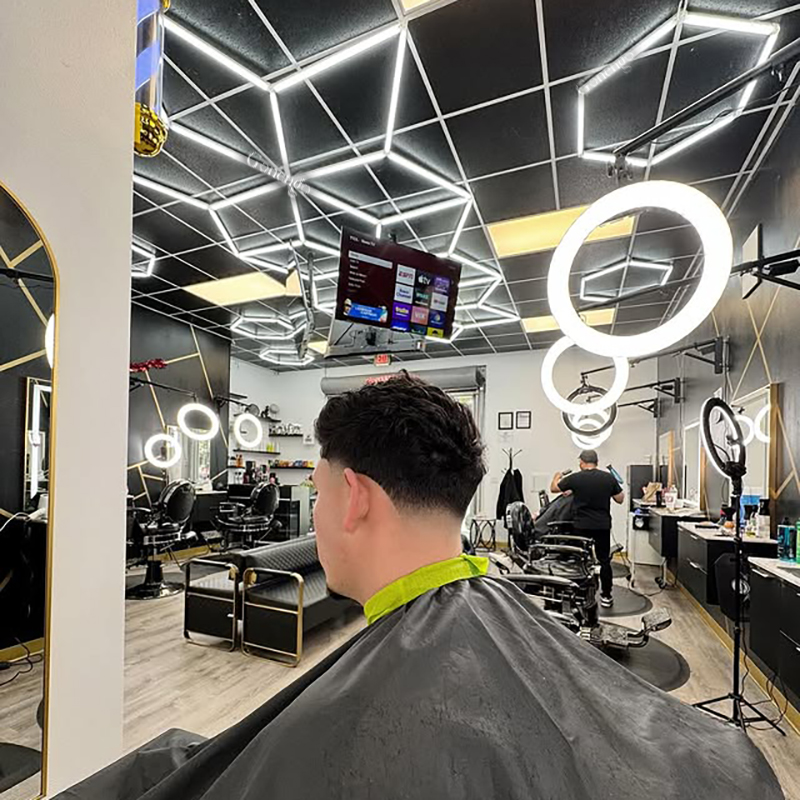
Unlike standard fixtures, barbershop ceiling geometric LED lights do more than brighten a room. They become part of the design language. For example:
- Geometric LED lights overhead create a futuristic, stylish feel that resonates with younger crowds.
- Angular wall-mounted lights can double as art, giving the space a bold statement.
- Custom patterns—such as honeycomb clusters or linear grids—add depth and structure to an otherwise plain ceiling or wall.
By combining these shapes, barbers can design a space that feels modern, creative, and photo-worthy, encouraging clients to share their experience on social media.
Popular Design Styles for Barbershop Ceiling Lighting
While style matters, lighting in a barbershop also has a practical role. Barbers need clarity to perform precise cuts, fades, and lineups. Geometric LED salon lights provide both: they offer bright, shadow-free illumination while still maintaining a unique aesthetic. Many systems are dimmable, allowing the vibe to shift depending on the time of day or the occasion—for example, brighter light during busy hours and softer light during evening appointments.
Recommended Lighting Specifications for Barbershops
| Parameter | Recommended Range | Purpose |
|---|---|---|
| CCT (Color Temperature) | 4000K–65000K | Natural skin tone rendering |
| CRI | ≥90 (preferred ≥95) | Accurate hair color evaluation |
| Luminous Output | 900–1200 lm/m module | Balanced brightness |
| UGR (Glare Control) | <19 | Reduce eye strain |
| Voltage | 110–240V | Global compatibility |
| Lifespan | 30,000–50,000 hrs | Commercial durability |
Zone-Based Lighting Strategy
Different barbershop zones require different lighting logic:
Workstation / Cutting Area
- Highest CRI priority
- Uniform overhead geometric LED lights
- Avoid deep shadows behind head area
- Recommended: 500–700 lux on working plane
Mirror Area
- Vertical + overhead combination
- Light strips aligned parallel to mirror edges
- Minimize facial distortion
Reception Area
- Lower intensity (300–400 lux)
- More decorative geometry allowed
- Brand identity focus rather than precision task lighting
Waiting Area
- Warm-neutral lighting
- Relaxed geometric spacing
- Soft transitions between modules
Best Polygon LED Light for Barbershops
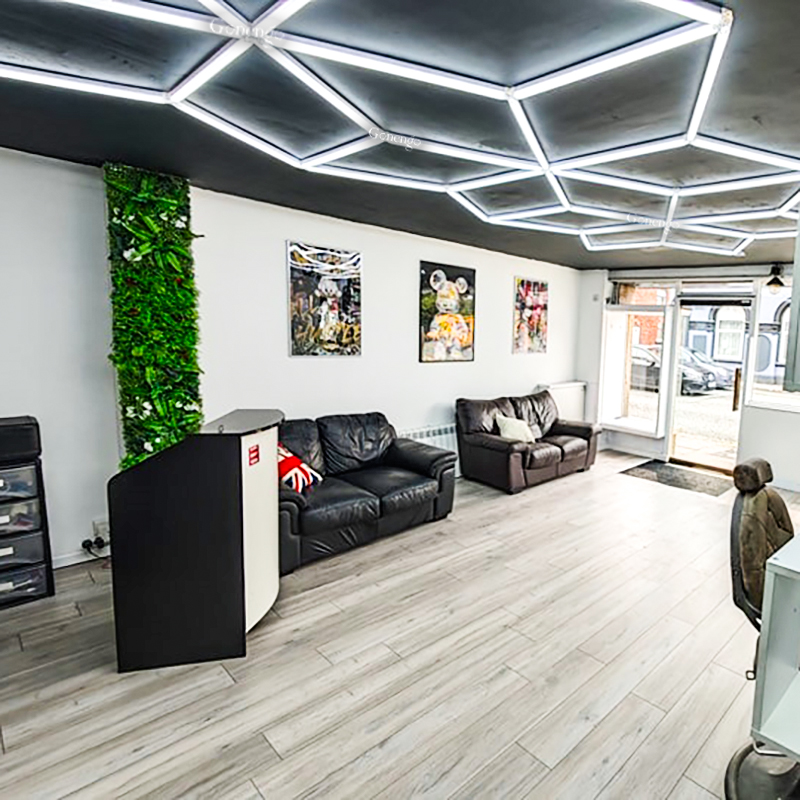
In contemporary interior lighting design, geometric LED lights for master barbershop are widely adopted for barbershops because they deliver a bold visual identity while maintaining highly functional illumination. This supports precision tasks such as hair cutting, fading, and styling. Among these solutions, the ZT6129 polygon LED garage light is recommended due to its distinctive modular polygon structure that allows designers to create customized ceiling layouts, forming rhythmic light patterns that enhance spatial depth and visual clarity without overwhelming the environment.
Creating a Signature Look
Every barbershop has its own identity, and lighting should reflect that. A vintage-inspired shop might pair geometric lights for modern barber studio with darker wood and leather furniture, creating a blend of old and new. A minimalist shop could opt for clean white geometric LED lights against monochrome walls, highlighting simplicity and precision. By curating both the layout and the color temperature of LEDs, owners can craft a signature look that clients instantly associate with their brand.
Installation & Layout Guide for Salon Ceiling Lighting
To make your barbershop visually striking and functional, follow these practical steps:
Step 1: Assess Your Space
Before buying lights, measure your ceilings, walls, and key areas like cutting stations, reception, and waiting zones. Note any architectural features, as geometric lights for hair hub work best when integrated with your shop’s existing lines and structure.
Step 2: Decide on Your Style
Choose the vibe you want to convey:
- Futuristic & Trendy: Interconnected hexagons across ceilings and walls.
- Minimalist & Modern: Linear strips and clean geometric outlines.
- Warm & Inviting: Warm-toned honeycomb panels for cozy ambiance.
Your style should reflect your brand identity, target clientele, and the overall experience you want your customers to have.
Step 3: Map Out Key Lighting Zones
Divide your shop into zones:
- Cutting Stations: Bright, even illumination for precision work.
- Waiting Area: Warm or color-adjustable lights to create a relaxing environment.
- Reception & Product Displays: Accent lights to highlight features and attract attention.
- Feature Walls: Statement geometric installations that reinforce your brand.
This zoning ensures every part of the shop is functional, while also enhancing the overall vibe.
Step 4: Choose Your Fixtures
Select the type of geometric LED lights for each zone:
- Ceiling Lights: Hexagons, triangles, or modular grids.
- Wall-mounted Shapes: Honeycomb clusters, diamonds, or custom logos.
- LED Strips: Linear patterns along edges, mirrors, or furniture.
Consider dimmable or color-changing options to make your space versatile for different times of day or events.
Step 5: Test Before Final Installation
If possible, temporarily install sample panels or strips to see how they interact with natural light, wall colors, and mirrors. Adjust angles and brightness until you achieve the desired effect. This saves time and ensures your final installation is visually cohesive.
Step 6: Installation & Integration
Hire a professional installer for ceiling panels or complex wall layouts. For simpler linear strips or modular pieces, DIY installation can work, but make sure wiring is safe and concealed. Consider integrating smart controls for dimming or color changes to enhance flexibility.
Step 7: Fine-Tune the Vibe
After installation, tweak brightness levels, color temperatures, and placement as needed. Encourage feedback from staff and clients—small adjustments can make a huge difference in comfort and aesthetics.
Geometric in Every Glow
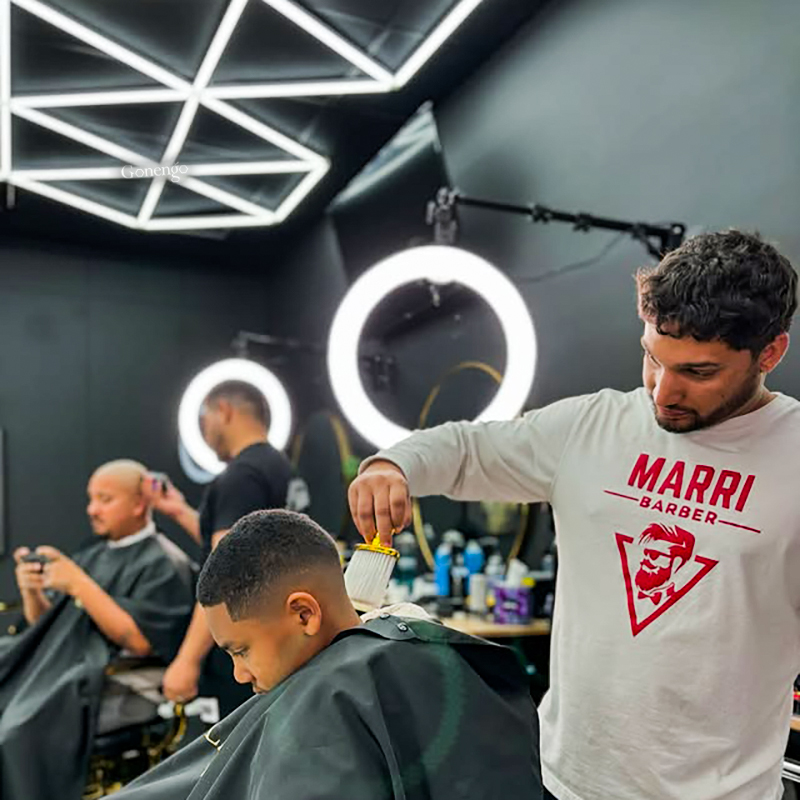
Shaping the vibe of a barbershop isn’t just about décor—it’s about crafting an atmosphere that clients remember. Geometric LED barbershop lights are more than a trend; they’re tools for design, mood, and functionality. Perfect shapes, patterns, and brightness of workshop ceiling geometric LED lights can help barbershops stand out as spaces that not only deliver sharp cuts but also radiate sharp style. Additionally, the use of geometric LED lights is essential for modern barbershop design, showcasing both aesthetic appeal and practical use.